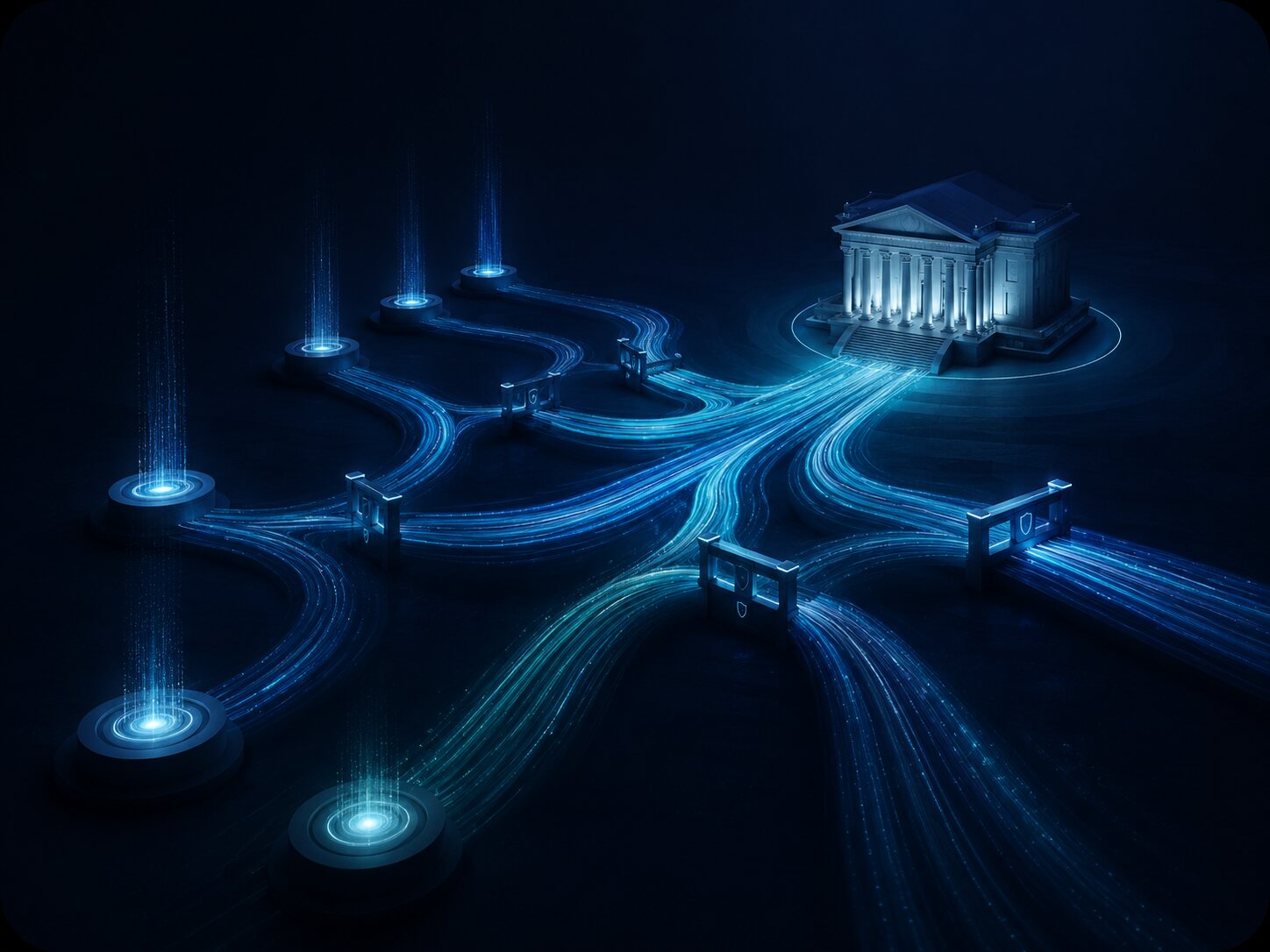
Accountability & Redress
Exploring the dispute pathways and legal architecture needed for enforceable accountability in AI systems.
What do you do when something goes wrong?
Right now almost nothing. There are no standardized pathways for a creator whose work was used without consent to seek correction. There are no structured mechanisms for a community whose knowledge was misrepresented in an AI system to challenge that misrepresentation. There are no shared audit pathways for institutions that need to verify a system's provenance claims.
Every dispute is handled ad hoc. Every takedown request navigates a different process at each platform. Every audit is commissioned from scratch. The result is that accountability in practice exists only for those with the resources to pursue it through individual legal action.
Infrastructure for enforceable accountability.
This workstream is the most nascent of the five because it depends on the others. Accountability infrastructure requires provenance records to verify what was used. It requires licensing frameworks to establish what obligations were owed. It requires compliance evidence to support claims in dispute proceedings.
With those foundations in place, the accountability workstream develops:
- Dispute intake infrastructure structured processes for creators, communities, and institutions to lodge challenges against AI systems
- Takedown and correction pathways operational mechanisms for requesting removal or correction of outputs, with versioned audit trails
- Audit support access to provenance records and compliance evidence when disputes require documentation
- Legal defense architecture structural legal support for communities and creators asserting rights in the commons, including strategic litigation capacity
- Unjust enrichment doctrine developing the legal theory that commercial extraction of value from the knowledge commons without consent or compensation may be actionable
Not outsiders asking for access.
The source.
A core question in AI accountability is who has standing to challenge AI systems legally and institutionally. Current frameworks are almost entirely oriented around the interests of developers: IP protection, trade secret, competitive advantage.
AI Commons is working from a different premise. The people whose knowledge made these systems possible creators, researchers, educators, communities are not outsiders requesting permission. They are the source material. That foundational position carries legal and moral standing that the accountability workstream aims to make practically enforceable.