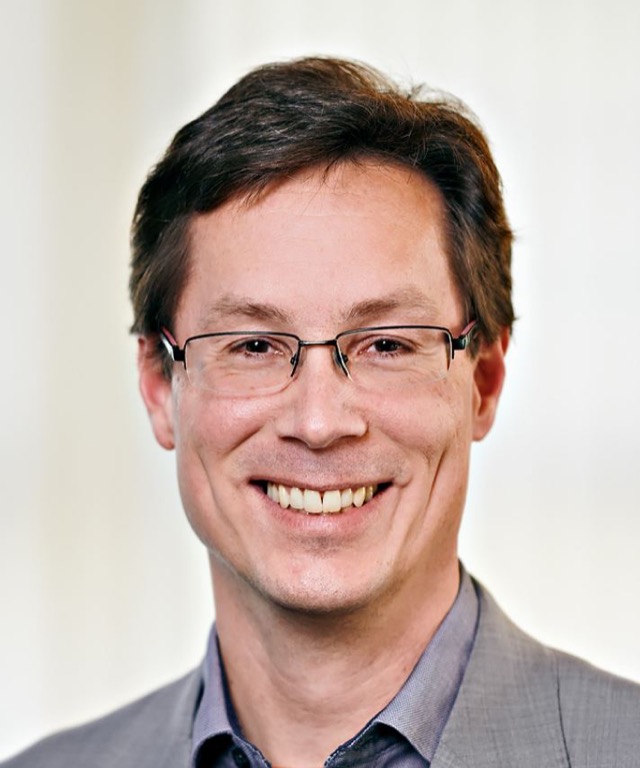
Sebastian Hallensleben
I work on concepts and infrastructures for trust in the digital space. How can we respond to the disruptive challenge of automated fakes and fabrication tools? How can we fundamentally rethink how trust is built and earned, and, most…
I work on concepts and infrastructures for trust in the digital space. How can we respond to the disruptive challenge of automated fakes and fabrication tools? How can we fundamentally rethink how trust is built and earned, and, most importantly, how do we build a new infrastructure for it?
Most recent result: https://www.standict.eu/news/trusted-information-digital-space
In the field of AI, my focus is on AI quality and on AI ethics. Both are currently hard to define, and even harder to achieve. I have been leading www.ai-ethics-impact.org that demonstrated a practical way of operationalising AI ethics.
For a surprisingly large proportion of these challenges, standardisation is a useful approach. At its core, standardisation is consensus building, and expressing this consensus in such a concrete way that it can guide engineers in their day-to-day work.
Short bio for speaking announcements and the like:
Dr Sebastian Hallensleben is the Chair of CEN-CENELEC JTC 21 where European AI standards to underpin EU regulation are being developed, a member of the Expert Advisory Board of the EU StandICT programme and Chair of the Trusted Information working group. He co-chairs the classification and risk assessment working group in OECD ONE.AI and has roles in AI committees at IEC, Council of Europe and UNESCO. – Sebastian Hallensleben heads Digitalisation and Artificial Intelligence at VDE Association for Electrical, Electronic and Information Technologies where he is responsible for new product and service development as well as for giving advice and developing frameworks for the German parliament and several federal ministries as well as the European Commission. He focusses in particular on AI ethics, on handling the impact of generative AI, building privacy-preserving trust infrastructures as well as characterising AI quality. – Earlier, Sebastian Hallensleben worked on dialog facilitation between academia, industry and policymaking (e.g. in the context of federal research foresight) and in international infrastructure project development for waste, energy and drinking water. He holds a PhD in physics and began his professional life in IT development and solutions architecture in the financial and telecoms sectors.